On Tuesday, 18 November, Israeli excavators tore down homes in Zawtar al-Sharqiya, a village in the Nabatieh district of south Lebanon. Four days later, the country marks its Independence Day with speeches, flags and a public holiday.
Both are happening in the same country, in the same week. Only one of them is being celebrated.
What 1943 promised
On 22 November 1943, French authorities released Lebanon’s elected leaders from detention and accepted the country’s independence. Since then, the date has stood for one idea: Lebanese land belongs to the Lebanese, and what happens on it is decided in Lebanon.
Eighty-three years later, that idea does not hold for a large part of the South.
Occupied. Not “disputed.” Occupied.
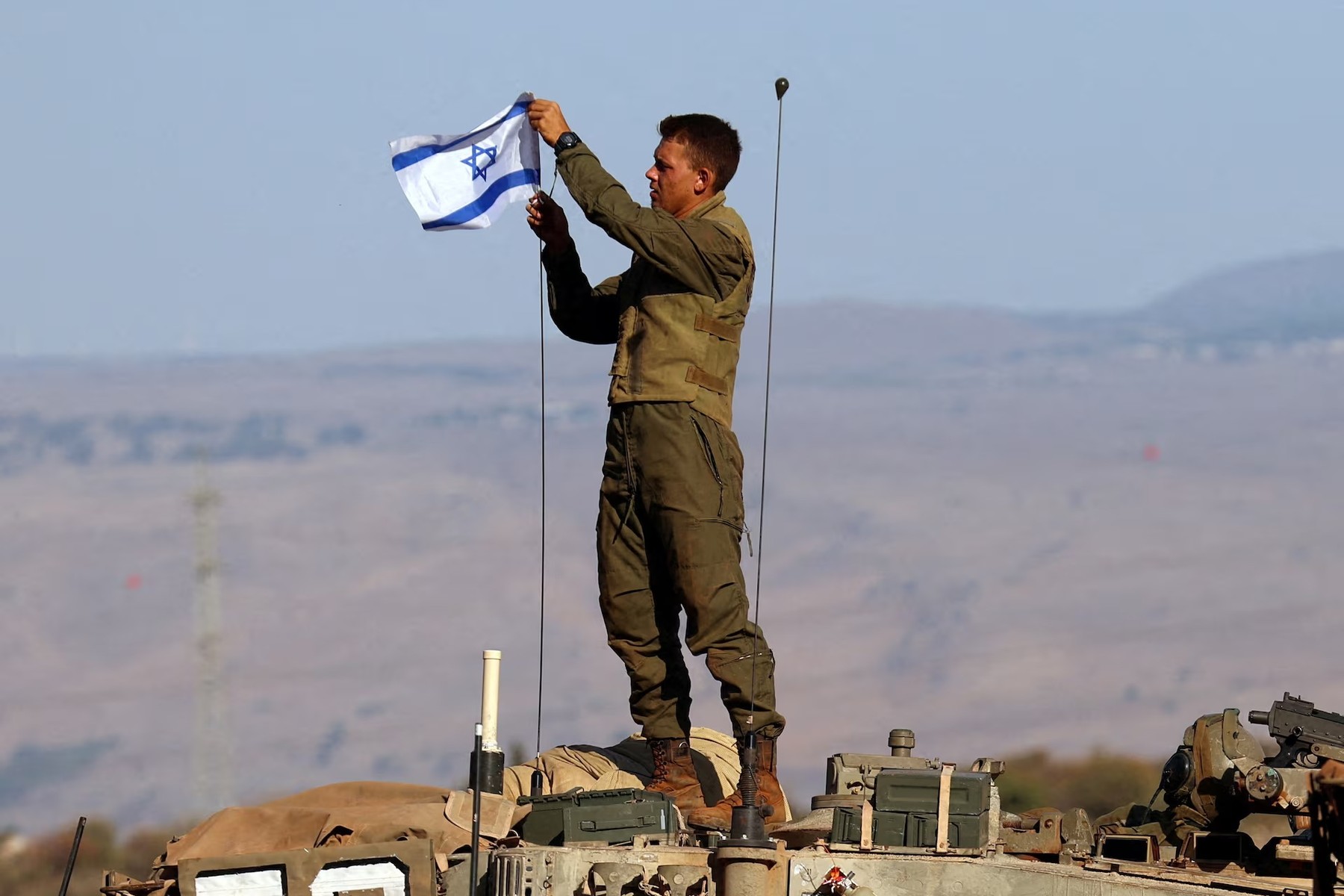
Israel launched its ground invasion of Lebanon on 16 March 2026. By the temporary ceasefire in late May, Israeli forces held about 570 to 600 square kilometres of Lebanese land, according to Reuters.
The occupation is not standing still. Lebanon’s National News Agency reported at the end of October that Israeli forces are cutting roads through southern hills and valleys to link their military positions (Arab News). On 20 November, Arab News reported that Israel keeps signalling it has no intention of giving those positions up.
Israeli leaders have said plainly what this is for. On 24 March, Defence Minister Israel Katz said Israel would demolish Lebanese border villages and hold territory up to the Litani River. On 24 June, he said: “200,000 residents will not return.”
The result is visible on the ground. Around 50 frontline villages, including Khiam and Bint Jbeil, have been destroyed (Al Jazeera). In April, Israel published a list of 53 towns and villages whose residents are barred from returning (AP). Maureen Philippon, the Norwegian Refugee Council’s country director in Lebanon, described driving through villages with “not one single standing wall” (Al Jazeera).
Since 2 March, Israeli attacks have killed 4,390 people in Lebanon and wounded 12,429, according to the Lebanese Health Ministry in early November. At the height of the war, more than 1.2 million people, over a fifth of the population, were driven from their homes.
They call it a ceasefire
This is one week in the South, as reported by Lebanon’s National News Agency and others:
- Tuesday, 18 November. Israeli excavators demolish homes in Zawtar al-Sharqiya. It is one of the first “pilot zones” where the Lebanese army deployed under the framework agreement reached with Israel in June (Al Jazeera).
- Wednesday, 19 November. Five Israeli airstrikes hit the Anti-Lebanon mountains near Janta, while airstrikes, drone attacks and artillery fire hit several towns in the South.
- Friday, 20 November. Two airstrikes on Kfar Tebnit. Artillery fire on Mansouri and Majdal Zoun. An Israeli drone flies over Beirut and Sidon (Middle East Monitor).
The Lebanese army was sent into Zawtar al-Sharqiya as part of a deal meant to bring the state back to the South. The bulldozers came anyway.
A ceasefire that only one side has to respect is not a ceasefire. Independence means deciding what happens on your own land. In Zawtar, Israel decides.
Amal Khalil, 1984–2026
Amal Khalil was born in 1984 in Al-Baisariyah, in the Sidon district. She joined the newspaper Al-Akhbar when it was founded in 2006 and spent her career reporting on the South. Shortly before she was killed, she was reporting on Israel demolishing homes in villages where its troops remained.
On 22 April 2026, Khalil and the photographer Zeinab Faraj were covering the aftermath of earlier strikes near al-Tayri, close to Bint Jbeil. An Israeli strike hit the car in front of them. They ran into a nearby house. That house was then struck. Amnesty International says a third strike hit the building about an hour later, killing Khalil and seriously wounding Faraj (Amnesty).
Al-Akhbar reported that the ambulance came under direct fire and that rescue teams were attacked, forcing them to withdraw before they reached her. By the time her body was recovered, more than six hours later, she was dead.
She was killed during a ceasefire. She was at least the ninth journalist killed in Lebanon that year. Prime Minister Nawaf Salam accused Israel of crimes against humanity (Al Jazeera). In August, Amnesty International called the attack a direct attack on civilians that must be investigated as a war crime.
There is no independence in a country where telling the truth gets you killed.
And the state?
The Lebanese state will mark the day as it always does, with speeches and an address from the president. Because the 22nd falls on a Sunday, the government has declared Monday, 23 November, a public holiday.
The state has not been silent. It condemned the killing of Amal Khalil. President Joseph Aoun visited the Nabatieh area in September and praised the people of the South for staying.
But words are not sovereignty. The June framework agreement was supposed to bring the Lebanese army back into the South, village by village. Zawtar al-Sharqiya was one of those villages, and the bulldozers came anyway. The same framework bound both sides to stop “all hostile or negative actions in international political or legal forums.” Rights groups have warned this could obstruct efforts to seek accountability (CPJ).
In the South, many feel abandoned. Back in April, The National reported growing resentment among southerners as Israel blocked their return while the army, underfunded and outgunned, stayed out of the fight (The National).
Independence is not a holiday you announce. It is a duty you fulfil. A state that celebrates while its southern villages are bulldozed is not celebrating independence. It is celebrating its absence.
Unfinished
The South is not a file on a negotiating table. It is the people of this country: the families of Khiam and Bint Jbeil, the residents of 53 villages told they cannot go home, and the journalist who went to tell their story and did not come back.
Independence will be complete the day the last family in the South goes home. Not one day before.
Until then, don’t celebrate. Remember them.
Sources: Lebanese Ministry of Public Health; National News Agency; Reuters; AP; Al Jazeera; Amnesty International; Committee to Protect Journalists; Al-Akhbar; The National; Arab News; Middle East Monitor.