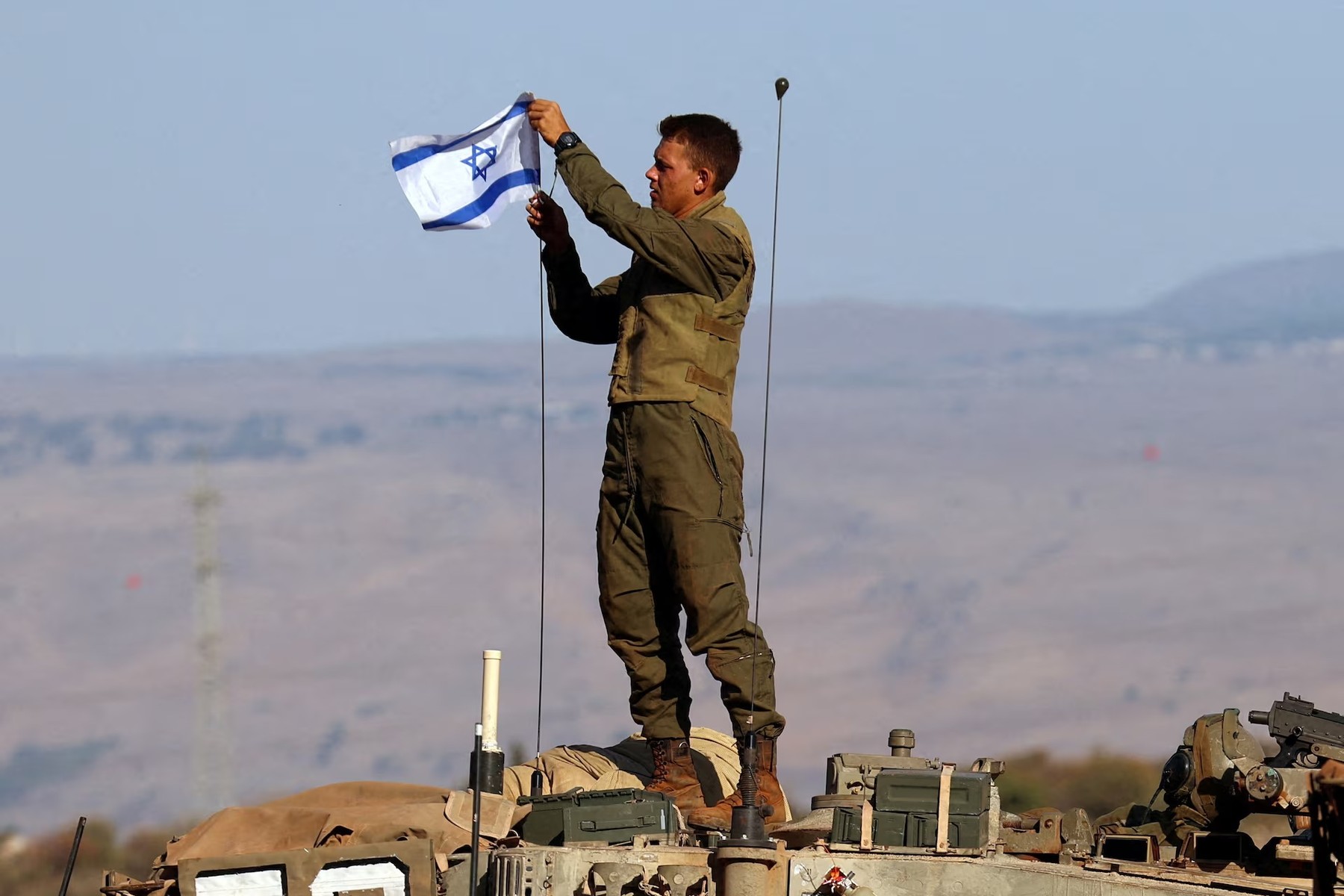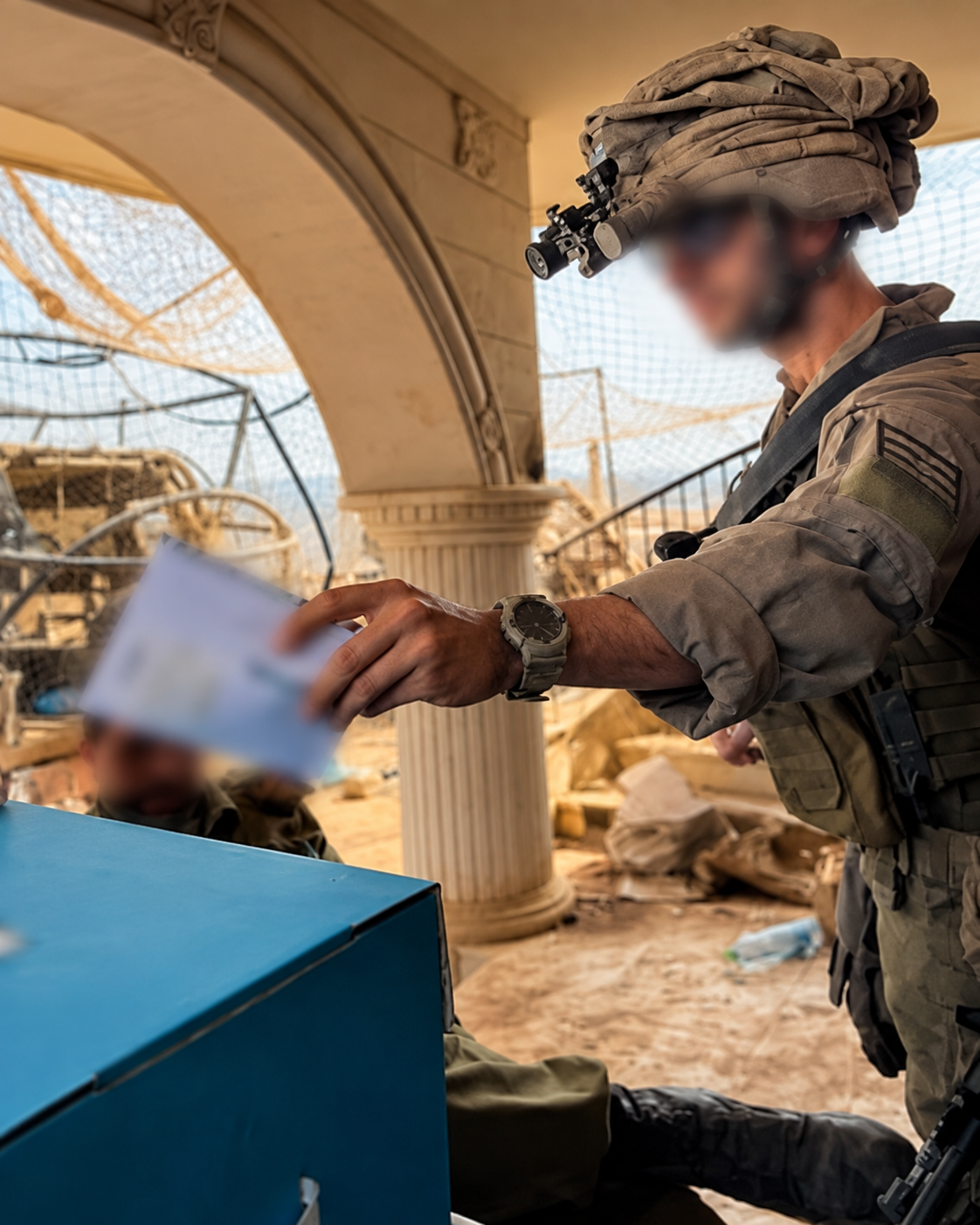
There is a ballot box in southern Lebanon. It is there for the soldiers occupying it.
On 21 October, Israeli soldiers began casting ballots in early voting for Israel’s parliamentary election, scheduled for 27 October. The Israeli military said voting was taking place at bases and military posts across several fronts. Photographs released by the military showed soldiers voting in southern Lebanon. In Zawtar Sharqieh, footage highlighted by L’Orient Today showed a polling station in the occupied village. The New Arab reported that the footage appeared to show a Lebanese house being used for the vote.
A Lebanese house. An Israeli polling station.
We should stay with that fact before moving on to the election, the candidates or the government they might form. This is someone’s village. These buildings had lives inside them before an occupying army found a use for them.
The photograph shows a soldier exercising his right to vote. It tells us very little about the rights of the people whose land he is standing on.
For that, we have to look beyond the ballot box.
In April, Haaretz published soldiers’ testimonies describing widespread looting in southern Lebanon. The soldiers said civilian belongings were taken from homes and businesses, and that commanders knew and failed to intervene. The Israeli military has said it takes disciplinary or criminal action when necessary and that military police inspect soldiers at the northern border. These are reported allegations and the military’s response; they do not establish the circumstances of every reported incident. (The New Arab; L’Orient Today.)
The belongings left behind by displaced families are still theirs. Leaving a house to survive does not make its contents available for theft. Nor does it make the house available to the army that forced its residents away.
Then there is the destruction.
Recent reporting has documented Israeli military positions inside Lebanese villages, demolition and bulldozing. On 8 October, Al-Monitor reported that Israeli forces continued to occupy and demolish homes in Zawtar Sharqieh. The following day, L’Orient Today reported that Israeli forces used a bulldozer to uproot trees near a Lebanese army position in neighboring Zawtar Gharbieh, while Zawtar Sharqieh remained under occupation and faced repeated gunfire and demolitions.
This is what surrounds the voting photograph: homes entered, belongings reportedly looted, villages demolished and land held under military control.
The election does not interrupt that occupation. The army has arranged for its soldiers to participate without leaving it.
Israel’s claim to democracy is often presented as though it should settle every other question. In Lebanon, the questions remain concrete. Who is occupying the village? Who has access to the houses? Who can reach their land? Who gets to return?
A ballot cast by an occupying soldier answers none of them.
The soldiers will have their votes counted. Lebanese families are still counting what has been taken from them.
Their homes, belongings and land do not become Israeli because Israeli soldiers can vote there.