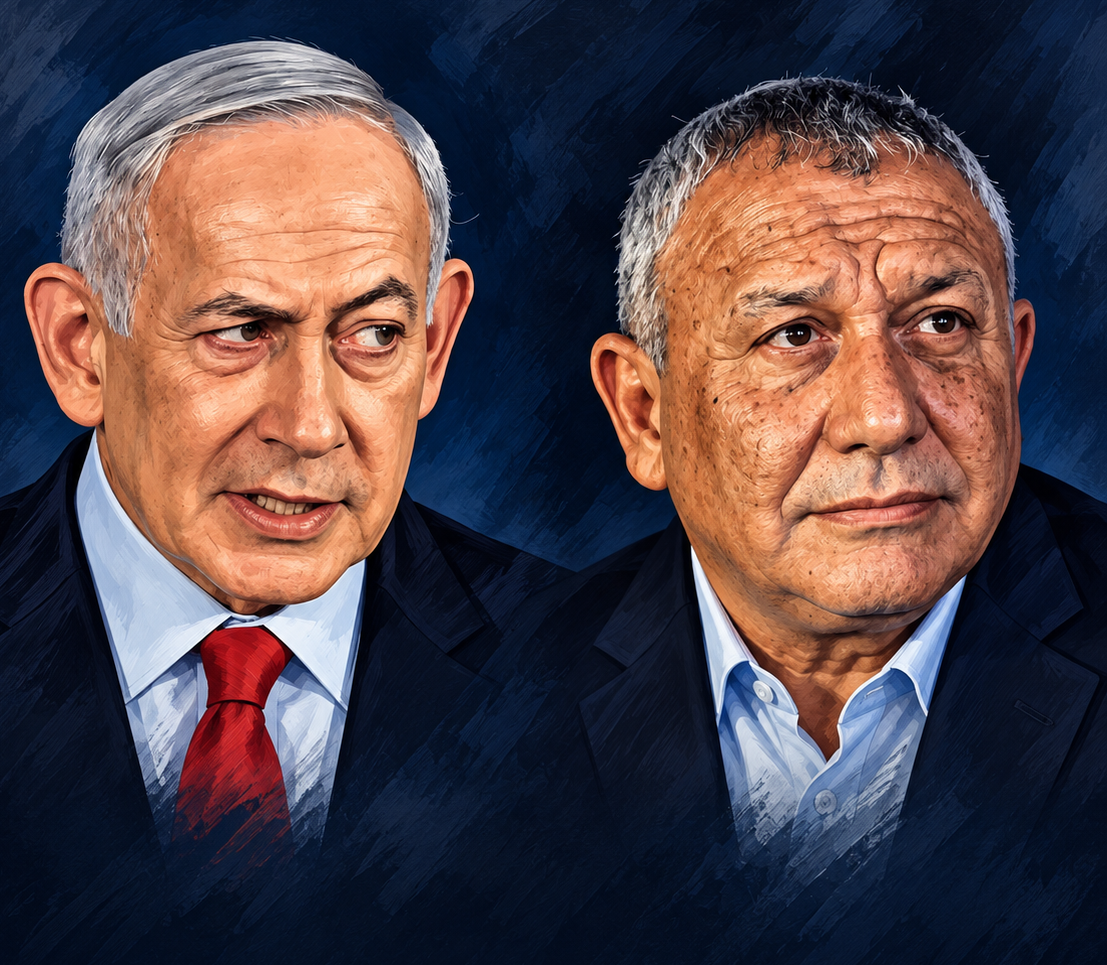
Israelis are voting today, and the campaign is being framed as a choice between Benjamin Netanyahu and the man trying to replace him, Gadi Eisenkot.
For many Israelis, the election is about Netanyahu’s responsibility for the failures of 7 October 2023, the hostages still held after that day, and a government increasingly shaped by the far right.
For Palestinians and Lebanese, another question matters: would a change in leadership bring an end to occupation, the killing and destruction in Gaza, and Israel’s war in Lebanon?
Eisenkot presents himself as an alternative. But his record gives little reason to assume that replacing Netanyahu would bring the change Palestinians and Lebanese need.
Netanyahu appointed Eisenkot as Israel’s military chief of staff in 2015. After the Hamas-led attacks of 7 October 2023, Eisenkot joined the emergency government and sat as an observer in its war cabinet as Israel began its assault on Gaza. He remained until June 2024, when he left alongside Benny Gantz, saying Netanyahu had failed to set out a strategy for ending the war. His criticism of Netanyahu was real. So was his role in the government directing the war’s first months. (ABC News.)
On 26 October, a UN commission of inquiry said Israel had continued to commit genocide in Gaza after the October 2025 ceasefire. Israel rejected the report and called its findings misinformation. The commission’s conclusion is a grave one. It also puts the decisions of the government Eisenkot served under renewed scrutiny. (Associated Press.)
A Palestinian future under Israeli control
Netanyahu and Eisenkot both oppose an independent Palestinian state. Both say Israel must keep ultimate security control over the land between the Jordan River and the Mediterranean Sea.
There are differences, and they matter. Netanyahu has overseen rapid settlement expansion in the occupied West Bank, alongside far-right partners who openly support annexation. Eisenkot says settlements should follow Israeli law. He opposes unauthorised outposts and the E1 settlement plan, which would divide the West Bank and further isolate East Jerusalem. He has also pledged to act against settler violence. (Reuters.)
For a Palestinian family facing settler violence, whether the people responsible are protected or prosecuted is not a small difference. A settlement project can also determine whether a community keeps its land or is cut off from the people and places around it.
But those differences do not answer the larger question of freedom. Eisenkot supports settlements and rejects Palestinian statehood. His promise of Israeli security control leaves Palestinians with no clear path to sovereignty or an end to occupation.
On Gaza, both men say Israeli forces should stay until Hamas is disarmed, and both have said they would resume fighting if they believe it necessary. Eisenkot says he would replace Hamas’s administration, through diplomacy or military force. After years of destruction and displacement, Palestinians need more than a debate over how Israel should manage the territory it controls. They need the killing to stop, the siege to end, and the right to decide their own future. (Reuters.)
Lebanon remembers
For Lebanese, Eisenkot’s military record carries its own meaning.
In 2008, while head of Israel’s Northern Command, Eisenkot described how Israel would respond to a future war in Lebanon. He said it would use “disproportionate force” and cause extensive damage and destruction in villages from which Israel was attacked. The approach became known as the Dahiya doctrine, named after Beirut’s southern suburbs, which Israel heavily bombed in the 2006 war. (Ynet.)
For the people who live in those villages, the language of military necessity does not erase what destruction means: homes reduced to rubble, families forced to leave, and communities left to rebuild after the bombs stop.
Eisenkot also supports keeping an Israeli security zone inside Lebanon. He has called for a greater French role alongside the United States in the diplomatic and security effort around Hezbollah. These positions raise a direct question about Lebanese sovereignty: how long would Israeli forces remain on Lebanese soil, and who would decide when they leave? (The Jerusalem Post.)
A change of face
Netanyahu and Eisenkot are not the same politician. They disagree over Netanyahu’s leadership, his coalition and some settlement policies. Eisenkot has criticised the way Netanyahu has conducted the wars.
But disagreement with Netanyahu is not the same as a commitment to peace. Neither man offers Palestinians an independent state. Both place Israeli military control at the centre of their security vision. And Eisenkot’s record in Lebanon is tied to a doctrine that openly called for disproportionate force.
A new leader could change the tone of Israel’s government, its coalition and some of its decisions. That could matter to people living through the consequences. But a change at the top is not enough.
A lasting peace means an end to occupation, freedom and equal rights for Palestinians, respect for Lebanon’s sovereignty, and accountability for the lives destroyed. Until those things change, a different face in the prime minister’s office cannot promise a different future.