They Did Not Bury Her Story
For months, much of the world knew Amani Bazzi simply as the mother on the stretcher.
Images of her wrapped in bandages circulated after an Israeli drone strike tore through her family in southern Lebanon. While Amani lay in hospital fighting her own injuries, her husband, Chadi Charara, their ten-year-old daughter, Celine, and their 19-month-old twins, Hadi and Cylan, were laid to rest.
Nearby, her eldest daughter, 13-year-old Aseel, was fighting for her life.
For many people, those images became the beginning and the end of Amani’s story.
They were not.
On 21 September 2025, the family was returning from lunch at Amani’s parents’ home in Bint Jbeil. According to contemporaneous reporting, an Israeli drone fired two missiles, striking a motorcycle and the family’s car. The attack killed Chadi and three of the couple’s children, as well as the motorcyclist. Amani and Aseel survived with severe injuries.
The Israeli military acknowledged carrying out the strike. It said it had targeted a Hezbollah member, expressed regret for the civilian deaths and said the incident was under investigation.
The months that followed were defined by surgeries, rehabilitation and grief. Doctors fought to save Aseel, whose injuries extended from head to toe. There were days when Amani wondered whether her daughter would ever stand again.
Today, mother and daughter have left the hospital behind.
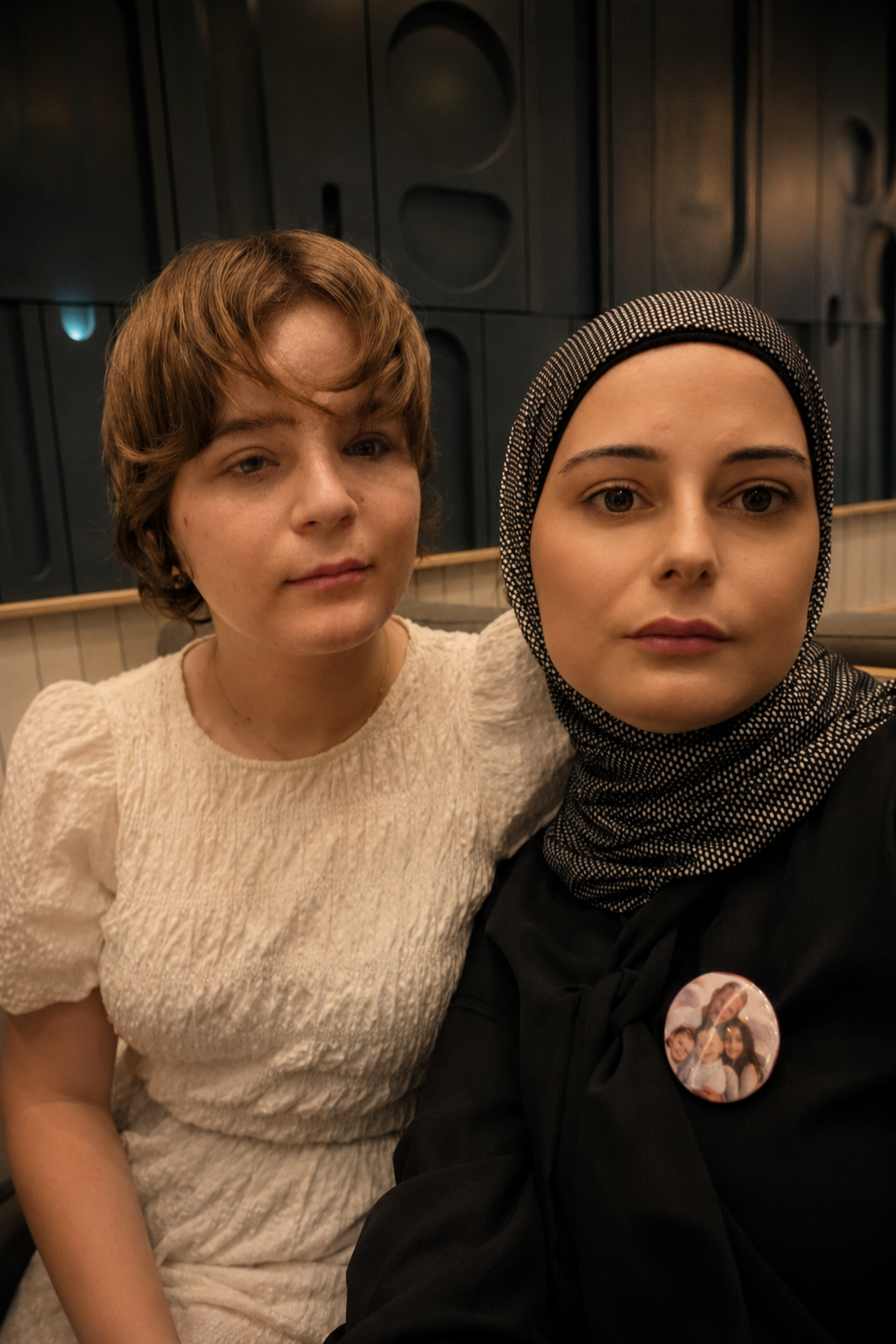
Amani still carries her family with her. Pinned to her chest are the smiling faces of Chadi, Celine, Hadi and Cylan. The grief has not faded, but it has become a source of purpose.
While she was recovering, Aseel made her mother a promise:
“When I get out and stand on my feet, the first thing I want to do is get justice for them.”
Today, she is standing.
Together, Amani and Aseel have transformed their survival into a campaign for accountability. They are taking their story beyond hospital walls—to international institutions, legal forums and anyone willing to listen.
They refuse to allow the deaths of their family to become another statistic or forgotten headline.
“They took my husband,” Amani told me. “They took three of my beautiful children. But they did not take our voices.”
For Amani and Aseel, survival was never the end of the story.
It was the beginning of a new one—defined not only by loss, but by an unwavering pursuit of justice.
This article is based on Alex Jørgensen’s personal interview with Amani Bazzi and Aseel Charara, supported by contemporaneous reporting from AFP, Reuters and L’Orient Today.